

By: Muideen Adio
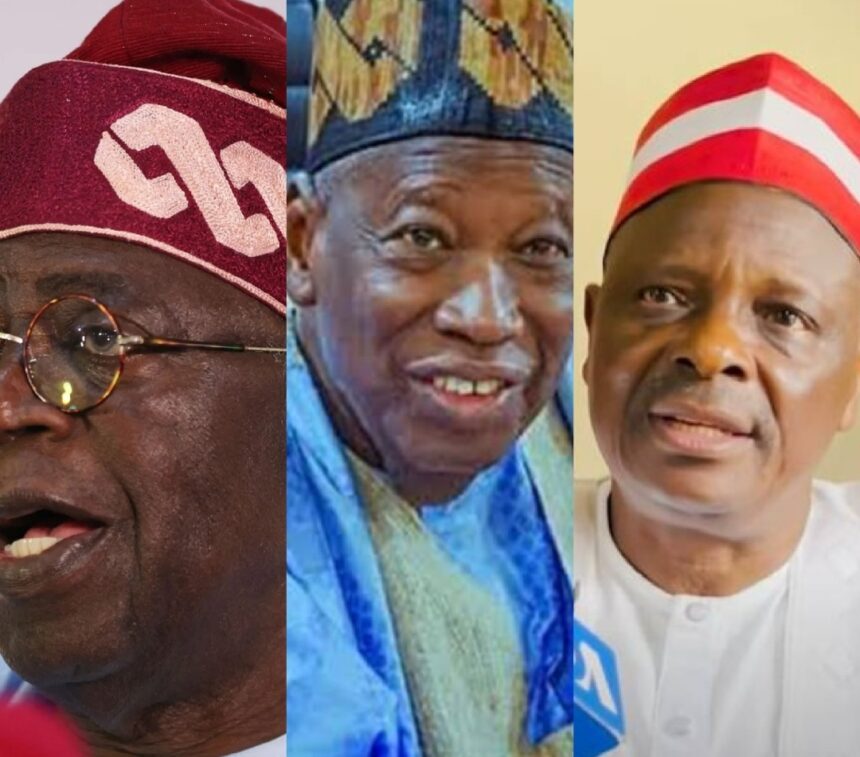
The political landscape in Nigeria witnessed a seismic shift on June 27, 2025, with the unexpected resignation of Dr. Abdullahi Umar Ganduje as the National Chairman of the All Progressives Congress (APC). This development sent shockwaves across political circles, both within Nigeria and beyond. While Ganduje cited health reasons for his resignation, many political observers believe there is more to the story than meets the eye.
The timing and circumstances surrounding his exit suggest a calculated political maneuver orchestrated by President Bola Ahmed Tinubu to strengthen his party’s position ahead of the 2027 elections.
Ganduje’s Resignation: A Calculated Sacrifice or the End of an Era?
Dr. Abdullahi Ganduje’s resignation has been a topic of intense debate. Officially, Ganduje attributed his decision to health concerns, but insiders in Nigeria’s political circles are skeptical of this explanation. Reports from the grapevine suggest that President Tinubu played a pivotal role in Ganduje’s departure. The move appears to be a strategic effort to address two pressing political challenges.
First, Ganduje’s exit paves the way for Senator Rabiu Musa Kwankwaso, a prominent political figure from Kano State, to join the APC. Kwankwaso’s potential crossover to the ruling party could bring along his loyal Kwankwasiyya movement and an estimated one million votes from Kano—a significant boost for the APC ahead of the 2027 elections. Second, Ganduje’s resignation opens the door for the North Central region to produce the next National Chairman of the APC, a move that could strengthen the party’s appeal in this critical geopolitical zone.
Who Will Succeed Ganduje?
Speculation is rife about who will take over as the National Chairman of the APC. Among the frontrunners are Senators Simon Lalong from Plateau South, Tanko Al-Makura from Nasarawa State, and George Akume, the current Secretary to the Government of the Federation (SGF). All three are long-time allies of President Tinubu and have strong political credentials. If Akume emerges as the new chairman, it is likely that either Hadiza Bala Usman or former Governor of Adamawa State Boni Haruna will replace him as SGF.
The choice of Akume or Lalong as chairman could also serve a strategic purpose: drawing in more support from the Christian North, a region that could play a decisive role in the 2027 elections. This calculated move underscores Tinubu’s commitment to broadening the APC’s appeal across Nigeria’s diverse political and religious landscape.
Kwankwaso’s Courtship with APC: A Game-Changer?
The potential entry of Senator Rabiu Musa Kwankwaso into the APC is a development that could reshape Nigeria’s political dynamics. Kwankwaso’s influence in Kano State and his ability to mobilize a large voter base make him a valuable asset for the ruling party. However, Tinubu must tread carefully in managing this new alliance.
While Kwankwaso’s arrival could bring significant electoral benefits, his loyalty to the APC is not guaranteed. Known for prioritizing his personal interests over group objectives, Kwankwaso’s political moves are often unpredictable. Tinubu will need to strike a delicate balance to ensure that Kwankwaso’s integration into the APC does not create internal divisions or alienate existing party members.
The Ganduje Factor: Managing Fallout in the North
One of the critical challenges for Tinubu will be managing the fallout from Ganduje’s resignation. Ganduje has been a staunch supporter of Tinubu’s presidential aspirations, demonstrating unwavering loyalty even in the face of opposition from former President Muhammadu Buhari. Treating Ganduje with respect and dignity is essential to avoid being perceived as a traitor by the Hausa-speaking Muslim North. Such a perception could damage Tinubu’s reputation and create a political scenario similar to the fallout with former Kaduna State Governor Nasir El-Rufai.
Additionally, Tinubu must ensure that Vice President Kashim Shettima remains in his position. Dropping Shettima for Kwankwaso or any other Northwest politician could alienate the North East and tarnish Tinubu’s standing in the core North. Maintaining Shettima’s role is crucial for preserving the APC’s unity and stability.
Implications for the 2027 Elections
The political moves currently underway within the APC are not just about immediate gains; they are part of a broader strategy aimed at securing victory in the 2027 elections. The imminent arrival of Kwankwaso and his political structure is a significant win for the APC, but it also comes with challenges that must be carefully managed.
Tinubu’s ability to navigate these complexities will determine the success of his political strategy. By addressing regional concerns, managing internal party dynamics, and building alliances with influential figures like Kwankwaso, Tinubu is positioning the APC for a strong showing in 2027. However, the road ahead is fraught with risks, and the President must act with precision and foresight to ensure that his plans do not backfire.
Conclusion: A New Chapter in Nigerian Politics
The resignation of Dr. Abdullahi Ganduje marks the beginning of a new chapter in Nigerian politics. With Kwankwaso’s potential entry into the APC and the reshuffling of key party positions, President Tinubu is laying the groundwork for a formidable political machinery ahead of the 2027 elections. While the challenges are significant, the opportunities are equally promising. If managed effectively, these developments could solidify the APC’s dominance and reshape Nigeria’s political landscape for years to come.