

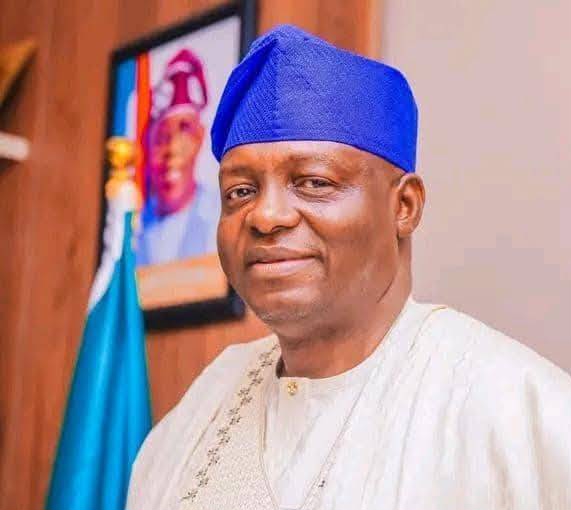
In what can best be described as a masterstroke, President Bola Ahmed Tinubu has once again demonstrated his political acuity with the appointment and ratification of Professor Nentawe Goshwe Yilwatda as the National Chairman of the All Progressives Congress (APC). This development, ratified by the National Executive Council (NEC) of the ruling party on Thursday, July 24, 2025, has been received with widespread acclaim across political, religious, and regional lines in Nigeria.
Professor Yilwatda, a respected academic, former Resident Electoral Commissioner, and the APC gubernatorial candidate in Plateau State in the last election, brings a refreshing dimension to the leadership of Nigeria’s most dominant political party. His appointment breaks a longstanding pattern in the APC—he becomes the first substantive National Chairman of the party since its formation in 2013 who is not a former state governor, signaling a shift toward a more merit-based leadership structure.
Religious and Regional Balancing Restored
One of the most contentious issues that has plagued the APC in recent years is the lack of religious and regional balance in its top leadership. With both the President (Bola Ahmed Tinubu) and Vice President (Kashim Shettima) being Muslims, and with the former National Chairman Dr. Abdullahi Umar Ganduje and current National Secretary Dr. Suraj Ajibola Basiru also being Muslims, critics had consistently accused the party of marginalizing Christians, especially those from the Middle Belt and the South-East.
With the emergence of Professor Yilwatda, a Christian and a pastor, the party appears to have responded to this criticism with deliberate precision. His appointment helps realign the party’s leadership architecture and sends a clear message that inclusiveness remains on the APC agenda, especially as the 2027 general elections approach.
North Central Finally Gets Its Due
Yilwatda hails from the North Central region, a zone that played a pivotal role in delivering strong votes for President Tinubu in the 2023 elections. Tinubu secured his third-highest votes in the North Central, trailing only the North West and South West. Yet, until now, the region had not been adequately compensated in the power structure of the APC.
By replacing Ganduje from the North West, the party has not only restored regional equity but also strategically positioned itself to consolidate support in Christian-majority areas of the North. The choice of Yilwatda is, therefore, not only symbolic but strategic—likely to improve the APC’s appeal in the Middle Belt and other Christian-dominated constituencies in the North.
An Image Makeover: No Corruption Baggage
One of the most significant contrasts between Professor Yilwatda and his predecessor is the absence of any corruption allegations. While Ganduje was constantly dogged by video clips and accusations of graft—which hurt the party’s public image—Yilwatda brings a clean slate and a reputation for integrity.
In a political environment where the credibility of public figures is increasingly under scrutiny, the APC’s new chairman is perceived as a breath of fresh air. This shift in image could go a long way in helping the APC rebrand itself ahead of the 2027 elections, especially among young and undecided voters.
INEC Experience: A Tactical Advantage
Perhaps the most intriguing component of Professor Yilwatda’s profile is his experience as a Resident Electoral Commissioner (REC) with the Independent National Electoral Commission (INEC). From July 2017 to December 2021, he served as the REC in Benue State, during which time he earned a reputation for professionalism and competence.
This insider knowledge of Nigeria’s electoral system is expected to be a significant strategic asset for the APC, giving it an edge in understanding the internal dynamics of INEC’s operations and electoral logistics. While critics argue that this could create a conflict of interest, others believe that Yilwatda’s understanding of electoral processes will strengthen the party’s preparedness and compliance ahead of the polls.
Nonetheless, this raises the valid and ongoing debate around the need for a cooling-off period or moratorium—typically five years—for former INEC officials before they can take up partisan political roles. While that legislation remains pending, Professor Yilwatda’s current appointment is perfectly legal and timely.
Conclusion: A Strategic and Symbolic Appointment
With this move, President Tinubu has once again proven himself a master political strategist. By choosing Professor Nentawe Yilwatda, he not only neutralizes religious and regional criticisms but also reinforces the APC’s credibility with a technocrat who brings experience, character, and strategy to the table.
As the APC prepares for the 2027 elections, Yilwatda’s leadership will be closely watched. For now, his appointment is widely seen as a bold and brilliant step—one that could help redefine the party’s future and broaden its national appeal.