

By : Muideen Adio
Introduction
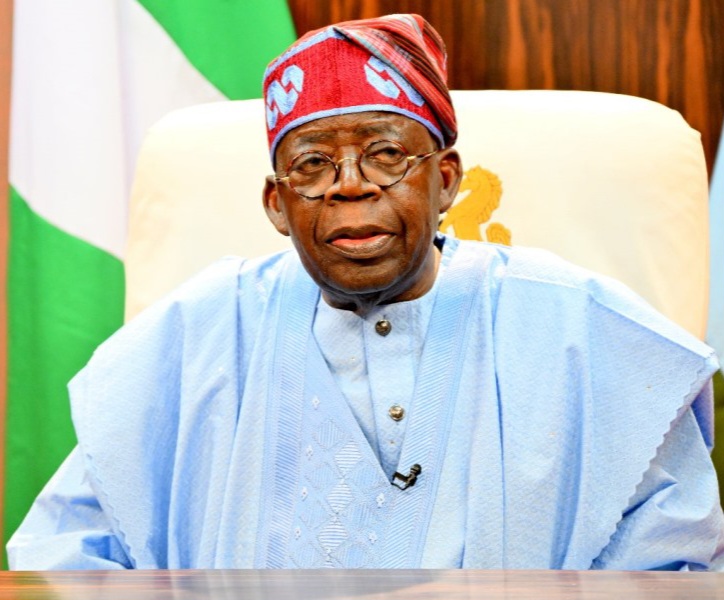
When President and Commander-in-Chief of the Armed Forces, Asiwaju Bola Ahmed Tinubu, announced the replacement of Nigeria’s service chiefs on Friday, October 24, 2025, it sent ripples through both political and military circles. At first glance, it might appear to be a routine administrative reshuffle — the kind that every Nigerian president eventually makes. But beneath the surface, this decision represents a calculated political and strategic maneuver, shaped by the intersection of history, timing, and power.
In a country where the military has long influenced the political trajectory, the appointment of service chiefs is never merely bureaucratic. It is a deliberate act of power consolidation, risk management, and institutional signaling — one that underscores the delicate balance between Nigeria’s democracy and its ever-watchful armed forces.
Historical Context: The Enduring Shadow of Military Influence
Since Nigeria’s independence in 1960, the military has played an outsized role in shaping national direction — at times as a stabilizing force, and at other times as a disruptive power. The memories of coups, counter-coups, and military dictatorships continue to haunt the nation’s political consciousness. Even after the return to democracy in 1999, Nigeria’s Fourth Republic has operated under the lingering shadow of military intervention.
Successive civilian presidents — from Obasanjo to Buhari — have understood the need to secure the loyalty of the armed forces. Appointments of service chiefs are therefore not just administrative; they are acts of political survival. Each new president tends to appoint individuals they can trust, sometimes at the cost of mass retirements among senior officers to make room for loyalists. Tinubu’s latest move fits squarely within this tradition — but with a distinct urgency born of the current socio-political climate.
The Timing and Context of Tinubu’s Decision
Tinubu’s reshuffle comes at a sensitive national moment. The country faces mounting economic hardship, rising insecurity, and growing public discontent. In such an atmosphere, the morale of the armed forces — and their relationship with the civilian leadership — becomes a matter of existential importance.
Recently, rumors of dissatisfaction and speculative coup plots have surfaced, particularly across social media platforms. Though both the Federal Government and the Defence Headquarters have dismissed such reports, the mere existence of these rumors underscores Nigeria’s fragile civil-military equilibrium. Against this backdrop, Tinubu’s shake-up functions as a preemptive strike, meant to reinforce the chain of command, reassert authority, and project an image of control and unity at the top.
The Politics of Loyalty and Control
In Nigeria, civilian control of the military is not a passive arrangement — it must be constantly negotiated and reinforced. Tinubu’s decision to replace key security figures can thus be read as an effort to realign loyalty structures within the armed forces. The President’s intent appears clear: to consolidate power, neutralize uncertainty, and rebuild confidence in the security apparatus at a time when the perception of instability can carry political consequences.
Every Nigerian president since 1999 has faced this same dilemma — how to ensure the military remains loyal, professional, and politically neutral, without appearing to compromise its autonomy. Tinubu’s approach, however, appears more strategically timed and politically assertive than most.
Ethno-Religious Balancing and Symbolic Representation
In a multiethnic and multireligious federation like Nigeria, appointments to top military positions carry immense symbolic significance. Nigerians watch closely to see if such appointments reflect national balance or regional favoritism. Presidents have traditionally sought to balance competence with representation, ensuring that the armed forces mirror the diversity of the country.
By retaining the Chief of Defence Staff, the Inspector General of Police, and the Director-General of the DSS from his South-West geopolitical base, Tinubu has followed a familiar path. Yet he also ensured that key strategic roles — notably the Chief of Army Staff — are occupied by officers with both professional credibility and personal trustworthiness. This delicate blend of regional representation and political calculation underscores the President’s dual objective: national balance and personal security.
Interpreting Tinubu’s Choices: Power, Trust, and Stability
Tinubu’s appointments are as much about perception as they are about performance. They send a clear message to multiple audiences — the political elite, the military hierarchy, and the Nigerian populace. To his allies, it signals control and confidence; to his opponents, it serves as a warning that the presidency remains firmly in command of the security levers of the state.
In essence, Tinubu is not merely reorganizing the armed forces — he is reshaping the political landscape and reaffirming civilian supremacy. His decisions will likely influence power alignments across regional blocs and could redefine how loyalty and merit are perceived within the military institution.
The Benefits of a Loyal Military Command
A cohesive and loyal military leadership can provide critical stability during turbulent times. It helps deter adventurism, preserve territorial integrity, and ensure continuity of governance. It also reassures both domestic and international observers that Nigeria’s democracy remains secure despite internal challenges.
Moreover, the presence of trusted commanders can enable better coordination in counter-insurgency operations, improve morale among troops, and facilitate decisive action against insecurity. In a nation grappling with banditry, terrorism, and separatist agitation, these factors are not trivial — they are foundational to national survival.
The Risks of Over-Politicizing the Armed Forces
However, there is a fine line between ensuring loyalty and undermining professionalism. When military appointments are perceived as driven primarily by political loyalty or ethnic considerations, they risk deepening internal divisions and lowering institutional morale. The military, as an embodiment of national unity, must remain above partisan politics to retain public trust.
If this balance is not carefully managed, the consequences could include weakened command structures, reduced operational effectiveness, and growing resentment among officers who feel sidelined by political interference. For Nigeria, with its history of coups and regional sensitivities, this is a danger the Tinubu administration must consciously avoid.
Implications for Democracy and Civil-Military Relations
Tinubu’s reshuffle is both a statement of intent and a test of leadership. It underscores his understanding that in Nigeria, the military remains the ultimate stabilizing force — and sometimes, the ultimate threat. By asserting control over the armed forces, Tinubu aims to ensure that his administration remains steady amid turbulence.
However, the long-term strength of Nigeria’s democracy will depend not just on loyalty at the top, but on institutional integrity throughout the ranks. True stability requires that the armed forces see themselves not as protectors of a leader, but as guardians of the republic.
Conclusion: Stability, Strategy, and the Burden of Leadership
President Tinubu’s decision to reshuffle the service chiefs marks a defining moment in his presidency. It demonstrates strategic foresight and political acumen, signaling strength in the face of uncertainty. Yet it also comes with heavy responsibility.
To consolidate stability, his government must pair this assertiveness with effective governance, economic relief, and public trust-building. While politicians and opposition voices should resist coup rhetoric and alarmist narratives, the administration must also respect the autonomy and professionalism of the armed forces.
Ultimately, this move reveals one enduring truth about Nigeria’s political order: in a nation where politics and the military are deeply intertwined, the loyalty of the service chiefs remains not just a matter of national security — but a central pillar of presidential power.