

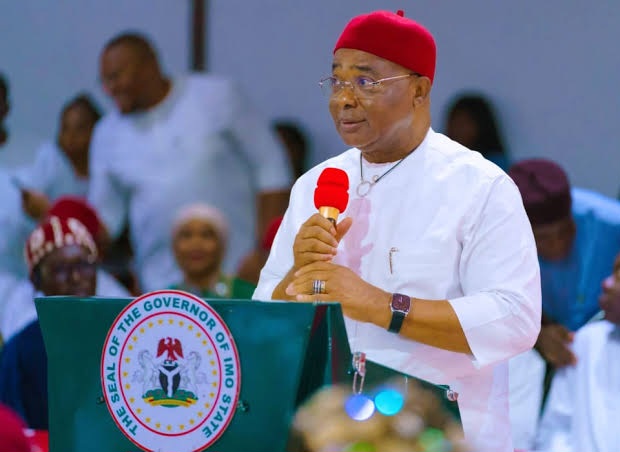
As Nigeria continues its constitutional amendment process, one proposal that demands urgent and decisive rejection is the controversial “Indigeneship Bill” proposed by Imo State Governor, Senator Hope Odidika Uzodinma. While cloaked in the rhetoric of national unity, the bill is fundamentally flawed and dangerous—it risks igniting ethnic tensions, undermining local identities, and destabilizing already fragile regions.
Understanding the Bill and Its Premise
Governor Uzodinma’s bill seeks to grant indigeneship status to any Nigerian who has resided in a particular place for ten (10) years. On the surface, this appears to promote inclusiveness and unity. However, a deeper examination reveals that such legislation is impractical and potentially explosive in a nation as complex and diverse as Nigeria.
Indigeneship, by definition, is the status of being a native of a place—usually determined by ancestry, lineage, and historical ties. It is not just a question of residency, but of deep-rooted cultural, historical, and often spiritual affiliation to a land. Attempting to legislate this into a time-bound civic qualification dismisses centuries of history, customs, and the delicate balance among Nigeria’s ethnic groups.
Historical and Contemporary Realities That Undermine the Bill
To grasp the risks embedded in this bill, one must look at both historical precedents and current tensions within and around Nigeria.
1. The Case of Aare Ona Kakanfo Oyabi
During the reign of Alaafin Abiodun (1774–1789), the third Aare Ona Kakanfo, Oyabi, hailed from Ajase—a town then under Oyo’s suzerainty, but now located in present-day Benin Republic. Despite being Yoruba by blood and history, his descendants today cannot claim Nigerian citizenship or indigeneship in Oyo. Yet, this bill seeks to grant indigeneship to someone from Enugu or Kano living in Oyo for just a decade. It’s not just illogical—it’s absurd.
2. Cross-border Cultural Ties vs. Legal Realities
In the North, people in Maradi (Niger Republic) and Kongolam (Katsina State) share common language, religion, and kinship. Historically, Maradi was part of the Hausa states, with deep roots in Katsina. Still, Maradi residents must cross legal borders and cannot lay claim to Nigerian identity. If even culturally identical border communities are restricted by nationality laws, why should someone from Ibadan with no historical or cultural connection to Katsina be granted indigeneship after ten years?
3. Intra-Nigerian Conflicts Rooted in Indigeneship
- Warri Crisis: Long-standing tensions among Itsekiris, Ijaws, and Urhobos over land ownership and indigeneship have fueled violence for decades. The recent Supreme Court ruling on delineation of wards has already reignited hostilities.
- Arochukwu Tensions: In Abia State, disputes between Aros and Ibibios over ancestral rights to Arochukwu—a historically contested area—highlight how unresolved indigeneship claims can fester.
- Middle Belt Flashpoints: No region is more vulnerable than the Middle Belt, where herder-farmer conflicts between Fulani and indigenous groups are already rampant. Injecting automatic indigeneship status into this mix is a recipe for disaster.
- Jos North Example: The appointment of Aminu Mato, a Hausa-Fulani, as caretaker chairman in Jos North LGA led to fierce opposition and violent protests. Plateau State remains an epicenter of ethnic unrest, largely due to unresolved indigene-settler tensions.
Why the Bill Is Unnecessary and Dangerous
1. Duplication of Existing Rights
Nigeria’s Constitution already guarantees every citizen the right to reside, work, own property, and access education anywhere in the country. These are the essential ingredients for equality—not indigeneship.
2. Chieftaincy and Traditional Structures at Risk
Across Nigeria, traditional leadership and chieftaincy titles are deeply tied to ancestral roots. Granting indigeneship based solely on residency will inevitably lead to legal battles, social unrest, and even violence over who can hold or contest for traditional roles.
3. Hostility from Host Communities
Rather than promoting integration, the bill could provoke backlash from host communities—especially minority tribes—who may see newcomers as future threats to their cultural or political dominance.
Let Indigeneship Evolve Organically
In many parts of the Hausa-speaking Muslim North, non-natives have historically assimilated and gained acceptance, sometimes even indigeneship. This happens not through legislation but through shared religion, language, values, intermarriage, and centuries-old migration patterns. Forcing this through law will disrupt organic integration and inflame dormant conflicts.
Conclusion: Reject the Bill for National Stability
Governor Uzodinma’s indigeneship bill, though perhaps well-intentioned, is a dangerous oversimplification of a profoundly complex issue. In a country still struggling to navigate its ethnic, cultural, and historical fault lines, such a bill is not just unnecessary—it is reckless.
Rather than enforce artificial unity, Nigeria must continue to strengthen equal citizenship rights and promote mutual respect across communities—while allowing identities and affiliations to evolve naturally.
This bill should not just be rejected—it should be buried.