

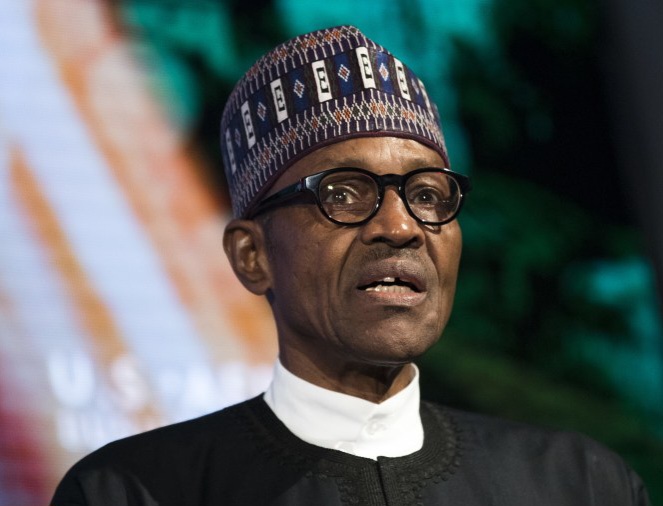
Ram rod straight, one of the many kids of his father, Muhammadu Buhari was born on December 17,1942 then Northern Protectorate of Nigeria ( now part of Katsina State). With a life dedicated to national service first a soldier and later politician culminating in his ascendancy to the presidency of Nigeria on May 29, 2015. Late General Buhari is without doubt of the most successful first generation of post-independence military officers in the history of Nigeria.
Introduction: A Life Marked by Service and Controversy
Muhammadu Buhari, former Nigerian military ruler and two-term civilian president, passed away today in a London medical facility at the age of 82. His death marks the end of an era for a man deeply etched into the political and historical fabric of Nigeria. Revered by many as a patriot and derided by others for his perceived failures, Buhari leaves behind a legacy both celebrated and contested.
Early Life and Military Career
Born on December 17, 1942, in Daura in present-day Katsina State, then part of the Northern Protectorate of colonial Nigeria, Buhari was one of many children of his father, Mallam Hardo Adamu. From a modest background, he joined the Nigerian military and rose through the ranks with discipline and grit. His military training took him to various countries, including India and the United Kingdom, and he would later become part of the first generation of post-independence officers who shaped Nigeria’s military and political history.
By the late 1970s and early 1980s, Buhari had cemented his reputation as a no-nonsense, upright officer. In December 1983, he became Nigeria’s military head of state after overthrowing the democratically elected government of President Shehu Shagari, citing corruption and mismanagement.
Military Rule (1983–1985): Discipline and Controversy
Buhari’s military regime (1983–1985) was marked by a campaign to instill discipline through his infamous “War Against Indiscipline” (WAI). His government declared war on corruption, waste, and social decay. While many Nigerians appreciated the crackdown on corruption and economic sabotage, others criticized his authoritarian style.
Controversies such as the restriction of press freedoms via Decree 4, the retroactive execution of drug traffickers, and the “53 suitcases” scandal involving a powerful emir (Major Jokolo) overshadowed his regime. He also incarcerated many politicians and public figures without trial. In August 1985, he was overthrown in a bloodless coup led by his then-Chief of Army Staff, General Ibrahim Babangida.
Return to Public Life: Petroleum Trust Fund and Political Rebirth
After a brief detention, Buhari lived a quiet life until 1995, when he was appointed Chairman of the Petroleum Trust Fund (PTF) under the military regime of General Sani Abacha. The PTF under Buhari was praised for relatively efficient execution of projects across Nigeria, particularly in the areas of road rehabilitation, education, and health.
With the return to democracy in 1999, Buhari transitioned into partisan politics. He founded the Congress for Progressive Change (CPC) and contested Nigeria’s presidential elections three times—2003, 2007, and 2011—without success. The 2011 election was particularly notable for the violent aftermath in northern Nigeria, reflecting the intensity of support he commanded among the northern electorate.
Presidency (2015–2023): Hopes Raised, Promises Faltered
Buhari’s breakthrough came in 2015, when he joined forces with other opposition parties to form the All Progressives Congress (APC). Riding on a wave of anti-corruption sentiment and promises of security and economic revival, he defeated incumbent President Goodluck Jonathan to become Nigeria’s first opposition candidate to win a presidential election.
Re-elected in 2019, Buhari’s administration was a mix of modest gains and missed opportunities. While his government recorded some successes in infrastructure, particularly in rail and road projects, as well as social investment programs, he struggled with rising insecurity, economic downturns, and criticism over perceived ethnic favoritism and poor handling of national unity. Many Nigerians felt his leadership style was distant, and his long medical absences abroad highlighted the decay in Nigeria’s healthcare system.
Legacy: A Northern Icon and Complex National Figure
Among Hausa-speaking Muslims in the northern region, Buhari remained an almost mythic figure, second only to the revered Sardauna of Sokoto, Sir Ahmadu Bello. His austere lifestyle, modest personal wealth, and anti-corruption image endeared him to many in the North, even when his national appeal waned.
Though history will judge his legacy with nuance, Buhari was undoubtedly one of Nigeria’s most influential figures. Whether as a general, chairman of the PTF, or democratically elected president, his name and image remain permanently woven into the Nigerian story.
Final Moments and Farewell
General Muhammadu Buhari breathed his last in a London hospital—a somber reminder of the deteriorated state of Nigeria’s public healthcare, even under his administration. His death marks the departure of the last of Nigeria’s iconic post-independence military leaders, closing a long chapter of national history.
As Nigerians reflect on his life, the final salute is owed to a man whose intentions were perhaps noble, whose efforts were sincere, but whose legacy remains as complex as the nation he once led.
Rest in peace, Muhammadu Buhari – soldier, president, and son of the North.