

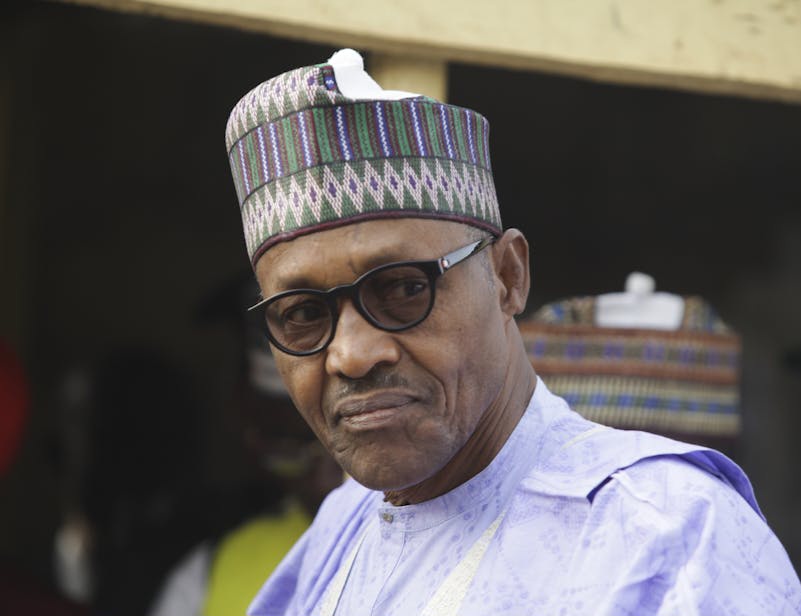
The passing of Nigeria’s immediate past President, Major General Muhammadu Buhari (Rtd.), on July 13, 2025, at The London Clinic, UK, marks a profound turning point in Nigerian political history. Beyond his controversial legacy as president, Buhari was the most significant political force in Northern Nigeria, particularly among the Hausa-Fulani Muslim population. His death has sent ripples through Nigeria’s political class and will undoubtedly shape the battle lines for the 2027 general elections.
Buhari’s Death: End of an Era
Muhammadu Buhari’s political career, spanning over four decades, culminated in his two-term presidency from 2015 to 2023. Despite criticisms regarding his handling of the economy, security, and inclusivity, Buhari retained immense popularity in Northern Nigeria, often drawing comparisons with Sir Ahmadu Bello, the revered Sardauna of Sokoto. His passing marks not just the end of a political era but also leaves behind a symbolic and strategic vacuum in the heart of Northern Nigerian politics.
Northern Power Vacuum and APC Realignment
Buhari’s influence in the Congress for Progressive Change (CPC) bloc of the All Progressives Congress (APC) was unmatched. He was the rallying point for millions in the North who saw him as a moral compass, even when his performance in office failed to meet their high expectations.
With his death, a leadership crisis looms within the APC, especially in the Hausa-speaking Muslim North. The region now lacks a towering figure who can provide political direction, build consensus, and mobilize voters with ease. The CPC bloc within the APC faces internal uncertainty, and rival parties such as the African Democratic Congress (ADC) are likely to capitalize on this vacuum by courting key Buhari loyalists.
This political fragmentation may lead to a realignment of forces ahead of the 2027 elections, as new aspirants emerge and the Northern elite recalibrates its strategies to retain relevance in national politics.
Tinubu and the Battle for the CPC Bloc
Before the 2013 merger that formed the APC, Buhari, as CPC presidential candidate, consistently garnered around 12 million votes from Northern Nigeria. The only exception was in 2007, when he ran against another Katsina native, Umaru Musa Yar’Adua, in a contest that divided the Northern vote.
In the 2015 and 2019 elections, Buhari’s “12 million vote bank” proved to be the foundation of APC’s national victories. However, in 2023, President Bola Ahmed Tinubu managed just over 5 million votes from the North, signaling a decline in APC’s grip on the region post-Buhari.
With Buhari now gone, the scramble for his loyal voter base has begun. This bloc remains a decisive factor in Nigerian presidential elections, and multiple stakeholders—including those within and outside APC—are positioning themselves to inherit it.
Funeral Politics and Symbolic Gestures
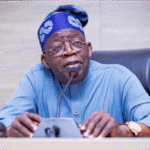
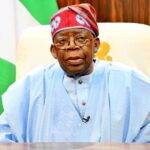
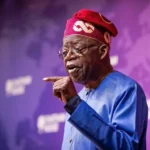
President Tinubu has moved swiftly to consolidate Buhari’s legacy and capture his support base. By ensuring a state funeral of national importance, Tinubu sent a strong message of continuity and respect. He went a step further by renaming the University of Maiduguri and the University of Maiduguri Teaching Hospital after the late General Buhari—actions loaded with political symbolism.
These moves have not gone unnoticed. During a condolence visit by First Lady Senator Oluremi Tinubu to the Emir of Daura, Buhari’s hometown, the aged monarch openly declared that “Tinubu is now our candidate for 2027.” Such pronouncements from traditional and religious institutions, especially in the core North, are likely to influence public sentiment and voter alignment.
Implications for the 2027 Elections
The 2027 elections are now poised to be one of the most fiercely contested in Nigeria’s recent history. Buhari’s death has created both opportunities and uncertainties. Key implications include:
- APC internal crisis in the North due to leadership vacuum
- Realignment of CPC loyalists, with possible defections to rival parties
- A renewed push by Tinubu to consolidate the North through symbolic and strategic gestures
- Opposition parties targeting Buhari’s 12 million vote bloc
- Increased political activism in Katsina, Kano, Kaduna, and Sokoto, all pivotal Northern states
For President Tinubu, winning over Buhari’s followers may be the difference between re-election and political defeat.
Conclusion
The death of Muhammadu Buhari is more than a national loss—it is a political earthquake with long-term implications for Nigeria’s power structure. The coming months will determine whether the APC can hold its Northern base together, or whether a new political configuration will emerge to challenge Tinubu’s dominance. One thing is clear: the road to 2027 begins now, and Buhari’s shadow will loom large over every step of the journey.