

Introduction
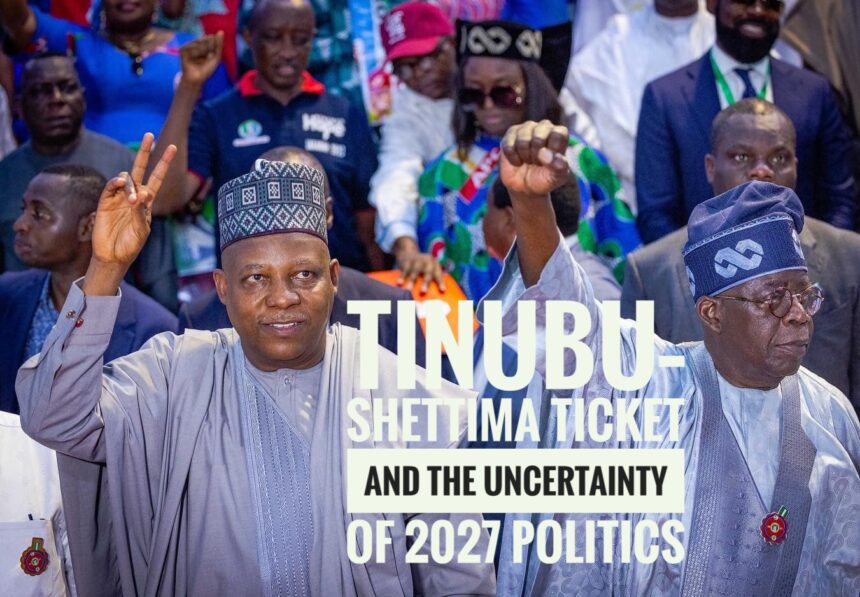
As Nigeria gears up for the 2027 general elections, the political atmosphere is already charged with debates, strategic moves, and power struggles. At the heart of this political discourse is the Tinubu–Shettima Muslim/Muslim ticket, which led the All Progressives Congress (APC) to victory in the 2023 presidential elections. This article delves into the controversies, political maneuvers, and implications surrounding this ticket, offering insights into what lies ahead for Nigeria’s political future.
Background of the Tinubu–Shettima Ticket
The Tinubu–Shettima ticket made history in 2023 by featuring two Muslims—Bola Ahmed Tinubu, a southern Yoruba Muslim, and Kashim Shettima, a northern Kanuri Muslim. This marked the first time in Nigeria’s Fourth Republic that a presidential ticket excluded religious diversity, sparking widespread debate. While the APC justified the decision as a strategic move to secure electoral victory, many Christians viewed it as a disregard for their faith and values. Despite the controversy, Tinubu and Shettima emerged victorious, drawing comparisons to the annulled 1993 Muslim/Muslim ticket of Late M.K.O Abiola and Baba Gana Kingibe.
Controversy Surrounding the Muslim/Muslim Ticket
The Muslim/Muslim ticket faced significant backlash, particularly from Christian communities who felt excluded from the political equation. Critics argued that the decision undermined Nigeria’s multi-religious identity and risked alienating key voter demographics. Efforts to frame the choice as purely political failed to quell the concerns of many, leaving the APC to navigate a divided electorate. Despite these challenges, Tinubu and Shettima were sworn in, setting the stage for ongoing debates about the future of this political arrangement.
Political Developments Leading to 2027
As the 2027 elections approach, political activities have intensified across Nigeria. Internal realignments, power tussles, and strategic declarations are shaping the discourse within the APC and beyond. Rumors about the Tinubu–Shettima ticket have evolved into open debates, with key moments such as the APC North East stakeholders forum meeting in June 2025 bringing the issue to the forefront. Earlier in May, APC governors endorsed President Tinubu for a second term but remained silent on the choice of his running mate, fueling speculation and internal party tensions.
Key Moments: APC North East Stakeholders Forum Meeting
The APC North East stakeholders forum meeting in Gombe on June 15, 2025, was a pivotal moment in the debate over the Tinubu–Shettima ticket. Initially, the APC North East Zonal Vice Chairman endorsed Tinubu without mentioning Shettima, sparking outrage among Shettima’s supporters. Led by Borno State Governor Professor Babagana Umara Zulum, these supporters successfully pushed for a revised endorsement that included both Tinubu and Shettima. This development sent a strong message to anti-Shettima forces, particularly in the Northwest zone, to reconsider their stance and avoid creating unnecessary tension within the party.
Why Tinubu Should Retain Shettima as Running Mate
Several compelling reasons support the retention of Kashim Shettima as Tinubu’s running mate for the 2027 elections:
- Proven Partnership: Shettima has demonstrated unwavering loyalty to Tinubu, making their partnership a “winning team.”
- Political Representation: The Northwest zone has already been adequately compensated with key positions in Tinubu’s government, including the highest number of ministers and the party’s national chairman, Dr. Abdullahi Umaru Ganduje.
- Electoral Strategy: Changing the ticket could alienate certain voter demographics and prove politically costly.
- Contextual Performance: While Shettima struggled to deliver Borno State in the 2023 elections, Tinubu himself lost in his base Lagos State and Osun State, making it unfair to single out Shettima for criticism.
Challenges and Counterarguments
Despite the arguments for retaining Shettima, there are challenges and counterarguments that Tinubu must consider:
- Northern Christian Representation: Northern Christians argue that they deserve the VP slot for inclusivity and moral reasons.
- Electoral Risks: The Muslim/Muslim ticket remains controversial and could alienate key voter demographics, particularly Christians.
- Regional Tensions: The Northwest zone’s push for greater representation could create internal divisions within the APC, potentially weakening the party’s unity ahead of the elections.
Conclusion
As Nigeria prepares for the 2027 elections, the Tinubu–Shettima ticket remains a focal point of political debate. While arguments for retaining Shettima are strong, the controversy surrounding the Muslim/Muslim ticket highlights the complexities of balancing political strategy with inclusivity and representation. For Tinubu, the decision to stick with Shettima or opt for a new running mate will have significant implications for his political fortunes and the unity of the APC. Ultimately, the principle of “if it is not broken, don’t fix it” may guide the decision-making process as the nation moves toward another critical electoral cycle.